Coordinate Plane Drawing Guide: Easy Methods & Free Tools
Coordinate plane drawing is a fundamental skill in mathematics that enables students to visualize relationships between numerical data points. This comprehensive guide covers everything from basic coordinate plane drawing techniques to advanced plotting methods, including free online tools, downloadable worksheets, and practical applications for 2025 educational standards.
How to Draw a Coordinate Plane: Step-by-Step Method
Drawing a coordinate plane begins with creating two perpendicular lines that intersect at a central point called the origin. The horizontal line represents the x-axis, while the vertical line represents the y-axis. Start by drawing a horizontal line across your paper, then add a vertical line that crosses it at the center point, forming four distinct sections called quadrants.
To complete your coordinate plane drawing, add numerical labels along both axes. Mark equal intervals on each axis, typically using integers like -5, -4, -3, -2, -1, 0, 1, 2, 3, 4, 5. The intersection point where both axes meet is always labeled as (0,0) and serves as the reference point for all coordinate plotting activities.
Essential Materials for Coordinate Plane Drawing
For accurate coordinate plane drawing, you’ll need graph paper, a ruler, and a pencil. Graph paper provides pre-made grids that ensure consistent spacing between coordinate points. A ruler helps create straight, perpendicular axes, while a sharp pencil allows for precise marking of coordinate points and labels.
Marking the Axes and Origin Point
The origin point (0,0) serves as the central reference for all coordinate plane drawing activities. Mark this point clearly where your horizontal and vertical axes intersect. Label the positive x-axis extending to the right, negative x-axis extending to the left, positive y-axis extending upward, and negative y-axis extending downward from the origin.
Understanding the 4 Quadrants in Coordinate Systems
The four quadrants in a coordinate plane are numbered counterclockwise starting from the upper right section. Quadrant I contains positive x and positive y coordinates, Quadrant II contains negative x and positive y coordinates, Quadrant III contains negative x and negative y coordinates, and Quadrant IV contains positive x and negative y coordinates.
Each quadrant has specific characteristics that determine the signs of coordinates plotted within them. Understanding these quadrants is essential for accurate coordinate plotting and helps students predict the location of points before actually marking them on the coordinate plane drawing.
Quadrant I: Positive X and Y Coordinates
Quadrant I, located in the upper right section of the coordinate plane, contains all points with positive x-coordinates and positive y-coordinates. For example, points like (3,4), (7,2), and (1,5) all fall within this quadrant. This quadrant typically represents the most intuitive plotting area for beginning students.
Quadrant II: Negative X, Positive Y Coordinates
Quadrant II occupies the upper left section where x-coordinates are negative and y-coordinates remain positive. Points such as (-2,3), (-5,7), and (-1,4) demonstrate typical coordinate plane positions in this quadrant. Students often find this quadrant challenging initially due to the negative x-values.
Quadrant III: Negative X and Y Coordinates
Located in the lower left section, Quadrant III contains points where both x and y coordinates are negative. Examples include (-3,-2), (-6,-4), and (-1,-7). This quadrant requires careful attention to negative signs when plotting points on coordinate plane drawing exercises.
Quadrant IV: Positive X, Negative Y Coordinates
Quadrant IV, found in the lower right section, features positive x-coordinates paired with negative y-coordinates. Points like (4,-3), (2,-5), and (6,-1) illustrate typical positions in this quadrant. Understanding this quadrant completes the foundation for comprehensive coordinate plane work.
Free Online Coordinate Plane Drawing Tools
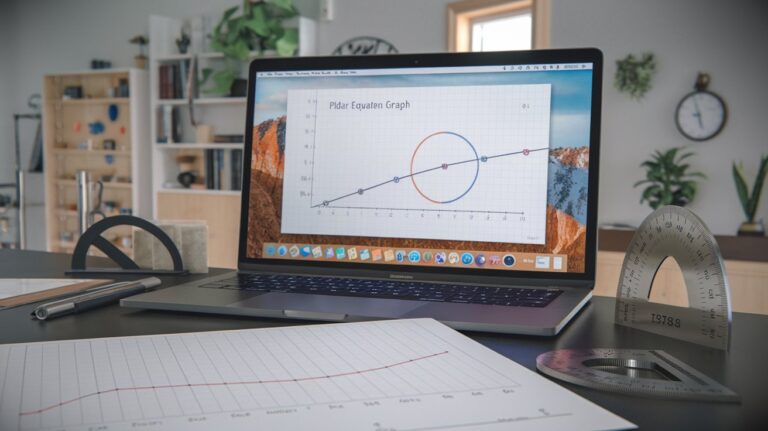
Modern education benefits from numerous free coordinate plane drawing applications and online generators available in 2025. Desmos Graphing Calculator offers comprehensive coordinate plotting capabilities, while GeoGebra provides interactive coordinate plane activities. These digital tools enhance traditional paper-based coordinate plane drawing methods.
Popular coordinate plane drawing online platforms include Math Playground’s coordinate grid tool, which allows students to practice plotting points interactively. Khan Academy offers coordinate plane exercises with immediate feedback, while IXL Learning provides adaptive coordinate plane practice problems tailored to individual student needs.
Desmos Graphing Calculator Features
Desmos provides advanced coordinate plane drawing capabilities including function graphing, point plotting, and geometric constructions. Students can create custom coordinate grids, adjust axis scales, and save their work for later review. The platform supports both individual and classroom use with teacher dashboard features.
GeoGebra Coordinate Plane Activities
GeoGebra offers interactive coordinate plane activities that combine traditional plotting with dynamic mathematical exploration. Students can manipulate points, create geometric shapes, and observe real-time changes in coordinates. The platform includes pre-built activities aligned with Common Core mathematics standards.
Coordinate Plane Generator and Worksheet Resources
A coordinate plane generator creates customizable grid templates for educational use. Teachers can specify axis ranges, grid spacing, and labeling options to match specific lesson requirements. These generators produce printable PDF files suitable for classroom distribution and homework assignments.
High-quality coordinate plane drawing worksheet resources include Math-Drills.com, which offers hundreds of free printable coordinate grid templates. SuperTeacherWorksheets provides themed coordinate plotting activities, while Education.com features interactive digital worksheets that complement traditional paper-based coordinate plane drawing exercises.
Creative Coordinate Plane Drawing Ideas
Engaging coordinate plane drawing ideas transform mathematical concepts into artistic expressions. Students can create pixel art using coordinate grids, design geometric patterns through systematic point plotting, or recreate famous paintings using coordinate-based techniques. These creative applications demonstrate practical coordinate plane drawing skills.
Popular project ideas include holiday-themed coordinate pictures, where students plot specific points to reveal seasonal images. Mystery coordinate activities challenge students to discover hidden pictures through accurate plotting. Collaborative classroom projects can involve large-scale coordinate plane drawing murals created by combining individual student contributions.
Pixel Art Creation Using Coordinates
Pixel art projects utilize coordinate plane grids to create digital-style artwork through systematic point coloring. Students receive coordinate lists that, when plotted and colored, reveal recognizable images. This activity combines mathematical precision with artistic creativity while reinforcing coordinate plotting skills.
Geometric Pattern Design Projects
Geometric pattern creation involves using coordinate plane drawing techniques to construct symmetrical designs. Students plot points according to mathematical formulas or sequences, creating intricate patterns that demonstrate coordinate system relationships. These projects often incorporate concepts like rotational symmetry and reflective transformations.
Mobile Apps for Coordinate Plane Drawing
The best coordinate plane drawing app options for 2025 include Graphing Calculator by Mathlab, which provides comprehensive coordinate plotting functionality on mobile devices. Quick Graph offers intuitive touch-based coordinate input, while Geometry Pad enables geometric construction using coordinate systems.
Educational apps like Prodigy Math and Khan Academy Kids incorporate coordinate plane activities within gamified learning experiences. These applications track student progress, provide adaptive difficulty levels, and offer immediate feedback for coordinate plotting exercises, making coordinate plane drawing more accessible to diverse learning styles.
Advanced Coordinate Plotting Techniques
Advanced coordinate plane drawing techniques involve plotting functions, creating transformations, and exploring mathematical relationships through visual representation. Students learn to plot linear equations, quadratic functions, and trigonometric curves using systematic coordinate point calculation methods.
Professional coordinate plane applications include engineering design, computer graphics, and scientific data visualization. Understanding coordinate systems enables students to pursue STEM careers requiring precise spatial reasoning and mathematical modeling skills essential in modern technological fields.
Related video about coordinate plane drawing
This video complements the article information with a practical visual demonstration.
Essential Q&A about coordinate plane drawing
How do you draw a coordinate plane step by step?
To draw a coordinate plane, start by drawing two perpendicular lines intersecting at a central point (origin). Label the horizontal line as the x-axis and vertical line as the y-axis. Add numerical labels at equal intervals along both axes, with positive numbers extending right and up, negative numbers extending left and down from the origin point (0,0).
What are the 4 types of coordinate systems commonly used?
The four main coordinate systems are: Cartesian coordinates (x,y rectangular grid), polar coordinates (radius and angle), cylindrical coordinates (radius, angle, height), and spherical coordinates (radius, two angles). For basic coordinate plane drawing, the Cartesian system with x and y axes is most commonly used in educational settings.
What are quadrants 1, 2, 3, and 4 called and where are they located?
Quadrant I is the upper right section with positive x and y coordinates. Quadrant II is the upper left with negative x and positive y coordinates. Quadrant III is the lower left with both negative x and y coordinates. Quadrant IV is the lower right with positive x and negative y coordinates. They are numbered counterclockwise starting from the upper right.
How do you plot points on a coordinate plane accurately?
To plot points accurately, start at the origin (0,0) and move horizontally according to the x-coordinate value (right for positive, left for negative), then move vertically according to the y-coordinate value (up for positive, down for negative). Mark the final position clearly and label it with the coordinate pair in parentheses, such as (3,4).
What are the best free online coordinate plane drawing tools?
The top free online coordinate plane tools include Desmos Graphing Calculator for advanced plotting, GeoGebra for interactive activities, Math Playground’s coordinate grid tool for practice, and Khan Academy’s coordinate exercises. These platforms offer various features from basic point plotting to complex function graphing, suitable for different educational levels.
How can coordinate plane drawing help with real-world applications?
Coordinate plane drawing skills apply to GPS navigation systems, computer graphics design, architectural blueprints, engineering schematics, and scientific data analysis. Understanding coordinate systems enables precise location mapping, digital art creation, and mathematical modeling essential in STEM fields, making it a valuable skill for modern careers.
| Drawing Method | Key Features | Best Use Case |
|---|---|---|
| Paper-Based Drawing | Traditional grid paper, ruler, pencil method | Classroom instruction and homework |
| Online Generators | Customizable PDF templates, printable grids | Teacher resource creation |
| Digital Apps | Interactive plotting, immediate feedback | Individual practice and assessment |
| Creative Projects | Pixel art, geometric patterns, collaborative work | Engaging mathematical application |