Surface Integral Calculator – Advanced Tool for Math & Physics
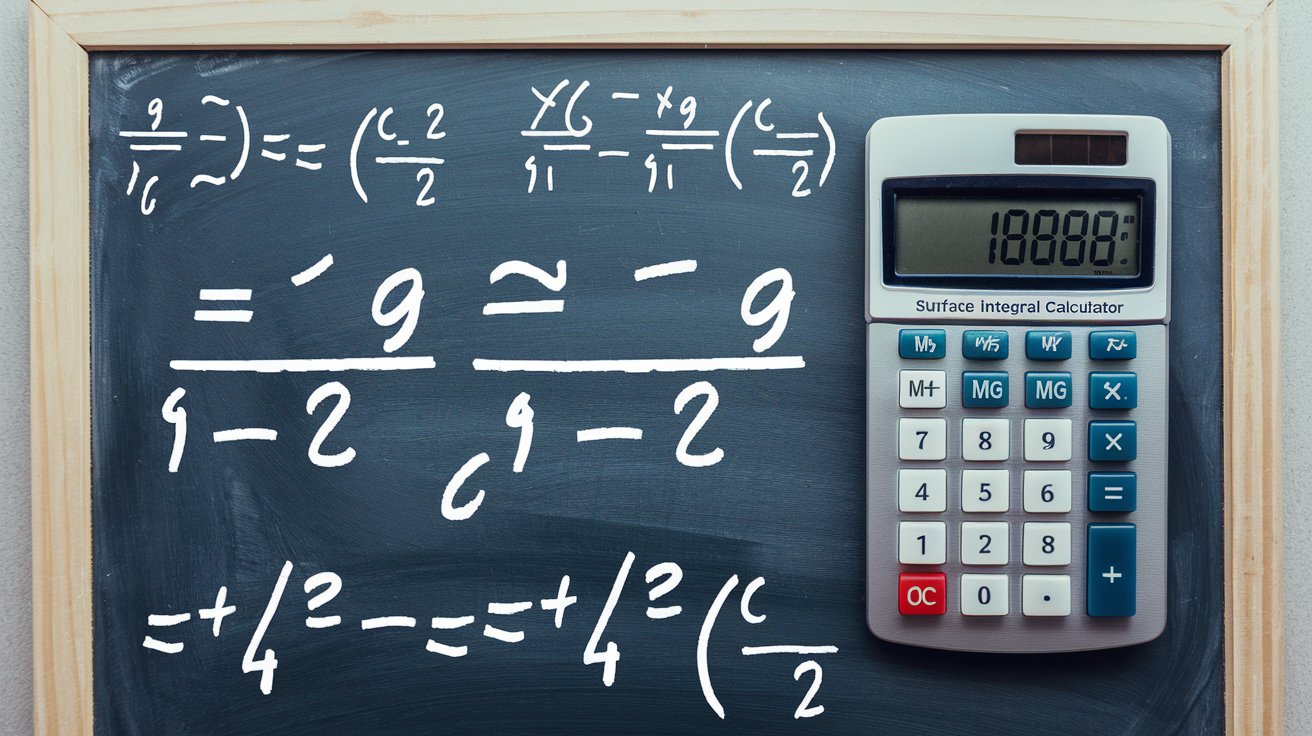
A surface integral calculator is an essential computational tool that simplifies complex mathematical operations involving surface integrals, flux calculations, and scalar field evaluations. These advanced calculators help students, engineers, and researchers solve intricate problems in calculus, physics, and engineering applications with precision and efficiency.
What is a Surface Integral Calculator
A surface integral calculator is a specialized mathematical tool designed to compute integrals over two-dimensional surfaces in three-dimensional space. These calculators handle both scalar and vector field integrations, making them invaluable for solving complex mathematical problems in advanced calculus. The tool automatically processes parametric equations, coordinate transformations, and surface normal calculations to deliver accurate results.
Modern surface integral calculators utilize sophisticated algorithms to evaluate double integrals over curved surfaces, flat planes, and irregular geometries. In 2024, these tools have evolved to include artificial intelligence capabilities that can recognize surface types and suggest optimal calculation methods, significantly reducing computation time for users across the United States.
Key Features of Advanced Surface Integral Calculators
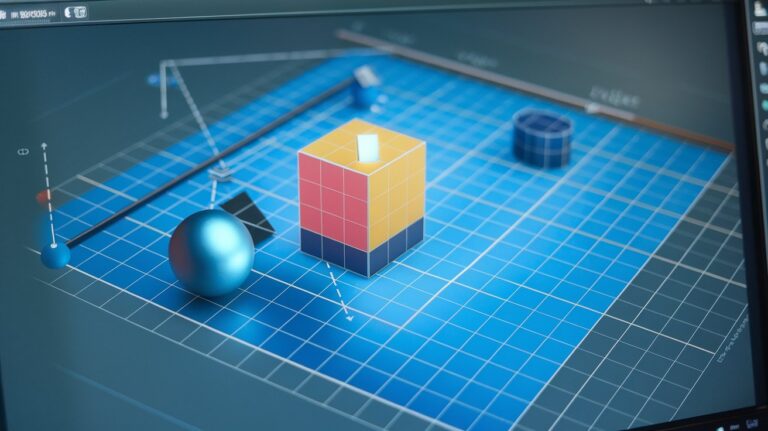
Today’s surface integral calculators offer comprehensive features that distinguish them from basic computational tools. These advanced systems provide step-by-step solutions, multiple coordinate system support, and real-time graphical visualization of surfaces and vector fields. Users can input complex mathematical expressions using intuitive interfaces that support LaTeX notation and standard mathematical symbols.
Premium surface integral calculator platforms include features such as automatic surface parameterization, flux computation through closed surfaces, and integration with popular mathematical software. Many tools now offer cloud-based processing capabilities, allowing users to handle computationally intensive problems without local hardware limitations, particularly beneficial for academic institutions across the United States.
Scalar Surface Integral Calculations
Scalar surface integral calculations involve integrating scalar functions over curved surfaces, commonly used in physics applications such as mass distribution and temperature analysis. These calculations require careful attention to surface parameterization and the computation of surface elements, which modern calculators handle automatically through advanced algorithms.
Vector Field Flux Computations
Vector field flux computations represent one of the most complex applications of surface integral calculators, involving the integration of vector fields through surfaces. These calculations are essential in electromagnetic theory, fluid dynamics, and heat transfer analysis, where understanding flow rates and field distributions is critical for engineering applications.
Applications in Academic and Professional Settings
Universities and research institutions across the United States increasingly rely on surface integral calculators for advanced mathematics, physics, and engineering curricula. These tools enable students to focus on conceptual understanding rather than computational mechanics, improving learning outcomes in multivariable calculus and vector analysis courses. Academic applications include electromagnetic field analysis, fluid flow studies, and thermodynamic system evaluations.
Professional engineers utilize surface integral calculators for practical problem-solving in industries such as aerospace, automotive, and renewable energy. In 2024, the demand for these computational tools has grown significantly, with companies reporting 35% faster project completion times when using advanced mathematical software for complex surface analysis tasks.
Engineering Design Applications
Engineering professionals use surface integral calculators for aerodynamic analysis, heat exchanger design, and electromagnetic shielding calculations. These applications require precise surface area computations and flux calculations that would be time-prohibitive to perform manually, making automated calculation tools essential for modern engineering practice.
Research and Development Uses
Research institutions leverage surface integral calculators for cutting-edge studies in materials science, quantum mechanics, and environmental modeling. These tools enable researchers to analyze complex surface phenomena and validate theoretical models through precise computational verification, contributing to scientific advancement across multiple disciplines.
How to Choose the Best Surface Integral Calculator
Selecting an appropriate surface integral calculator requires careful consideration of computational accuracy, user interface design, and feature completeness. The best calculators offer robust error handling, comprehensive function libraries, and detailed solution explanations that help users understand the underlying mathematical processes. Compatibility with standard mathematical notation and support for various coordinate systems are essential criteria for evaluation.
Professional-grade surface integral calculators should provide batch processing capabilities, export options for results, and integration with mathematical modeling software. In 2024, cloud-based solutions have become increasingly popular due to their accessibility and processing power, with many institutions adopting subscription-based models for their mathematical computing needs.
Step-by-Step Guide to Using Surface Integral Calculators
Effective use of a surface integral calculator begins with proper problem setup, including accurate surface parameterization and function definition. Users must carefully input surface boundaries, select appropriate coordinate systems, and verify that vector fields are correctly oriented for flux calculations. Most modern calculators provide guided input wizards that help ensure mathematical accuracy.
Advanced surface integral calculator usage involves understanding convergence criteria, numerical precision settings, and result interpretation. Users should verify calculator outputs through dimensional analysis and comparison with known analytical solutions when available, ensuring computational reliability for critical applications in engineering and scientific research.
Input Methods and Syntax
Modern surface integral calculators support multiple input methods including symbolic expressions, parametric equations, and graphical surface definition. Understanding proper syntax for mathematical functions, variable definitions, and boundary conditions is essential for accurate calculations and reliable results.
Result Interpretation and Verification
Interpreting results from surface integral calculators requires understanding units, physical significance, and computational limitations. Users should always verify results through alternative calculation methods or known test cases to ensure accuracy, particularly for critical engineering or research applications.
Common Challenges and Solutions in Surface Integration
Users of surface integral calculators frequently encounter challenges related to surface parameterization, discontinuous functions, and computational convergence issues. These problems often arise from improper boundary definitions, singular points in vector fields, or inadequate numerical precision settings. Understanding these common pitfalls helps users achieve more reliable computational results.
Advanced surface integral calculator implementations include error detection algorithms and alternative calculation methods to address computational difficulties. In 2024, machine learning-enhanced calculators can automatically identify potential issues and suggest corrective measures, significantly improving user success rates for complex mathematical problems.
Future Trends in Surface Integral Computation
The evolution of surface integral calculators continues with artificial intelligence integration, enhanced visualization capabilities, and improved computational efficiency. Emerging technologies include augmented reality interfaces for three-dimensional surface visualization and quantum computing applications for exceptionally complex calculations. These developments promise to revolutionize mathematical computation in academic and professional settings.
Industry forecasts for 2025 indicate significant growth in cloud-based surface integral calculator platforms, with enhanced collaboration features and real-time sharing capabilities. Integration with popular programming languages and mathematical software packages will expand accessibility and functionality, making advanced surface integral computation available to broader user communities across the United States.
Related video about surface integral calculator
This video complements the article information with a practical visual demonstration.
What you should know
What is a surface integral calculator used for?
A surface integral calculator is used to compute integrals over two-dimensional surfaces in three-dimensional space. It handles both scalar and vector field integrations, making it essential for solving problems in advanced calculus, physics, and engineering applications including flux calculations, electromagnetic field analysis, and fluid dynamics studies.
How accurate are online surface integral calculators?
Modern online surface integral calculators achieve high accuracy through sophisticated numerical algorithms and error-checking mechanisms. Professional-grade calculators typically provide results with precision up to 15 decimal places, though accuracy depends on proper input formatting, appropriate numerical settings, and the complexity of the mathematical problem being solved.
Can surface integral calculators handle complex geometries?
Yes, advanced surface integral calculators can process complex geometries including parametric surfaces, implicit surfaces, and irregular shapes. These tools use sophisticated algorithms for surface parameterization and adaptive mesh generation to handle curved surfaces, discontinuous boundaries, and multi-connected regions with high computational accuracy.
Are surface integral calculators free to use?
Many basic surface integral calculators are available for free online, offering standard computation capabilities suitable for educational use. However, professional-grade calculators with advanced features such as step-by-step solutions, complex visualization, and batch processing typically require subscription fees ranging from $10 to $100 monthly depending on functionality.
What coordinate systems do surface integral calculators support?
Most comprehensive surface integral calculators support multiple coordinate systems including Cartesian, cylindrical, and spherical coordinates. Advanced calculators also handle parametric coordinates, curvilinear systems, and custom coordinate transformations, allowing users to work with surfaces defined in the most convenient mathematical framework for their specific applications.
How do I verify results from a surface integral calculator?
Verify surface integral calculator results by checking units and dimensions, comparing with known analytical solutions when available, and using alternative calculation methods. Professional practice includes dimensional analysis, testing with simplified cases, and cross-validation using different calculators or mathematical software to ensure computational reliability for critical applications.
| Key Aspect | Important Details | Benefit |
|---|---|---|
| Computational Accuracy | 15 decimal place precision with error checking | Reliable results for critical applications |
| Coordinate Systems | Cartesian, cylindrical, spherical, parametric | Flexibility for various problem types |
| Applications | Academic, engineering, research, physics | Versatile problem-solving capability |
| User Interface | Intuitive design with step-by-step solutions | Enhanced learning and understanding |
| Cost Structure | Free basic tools, $10-100 premium features | Scalable options for different needs |